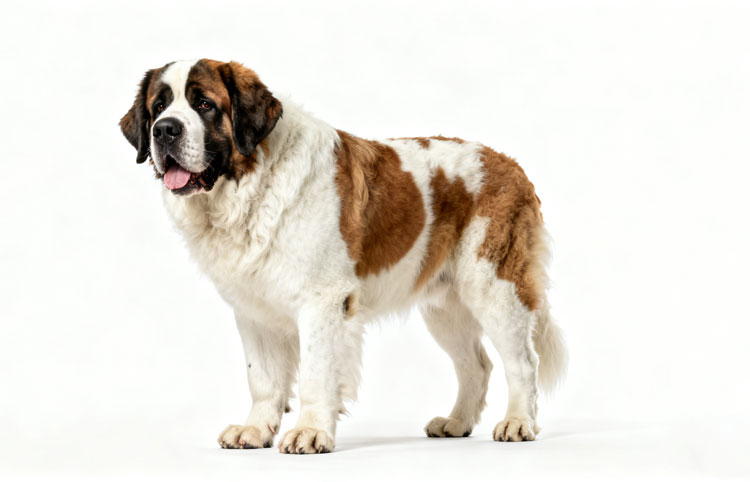
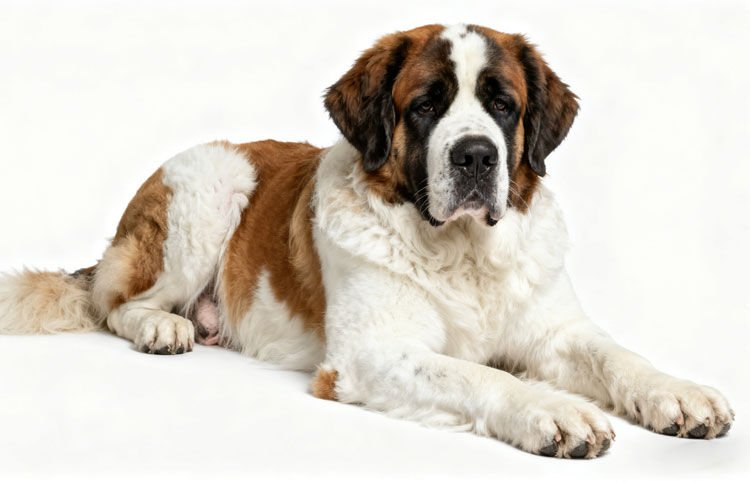
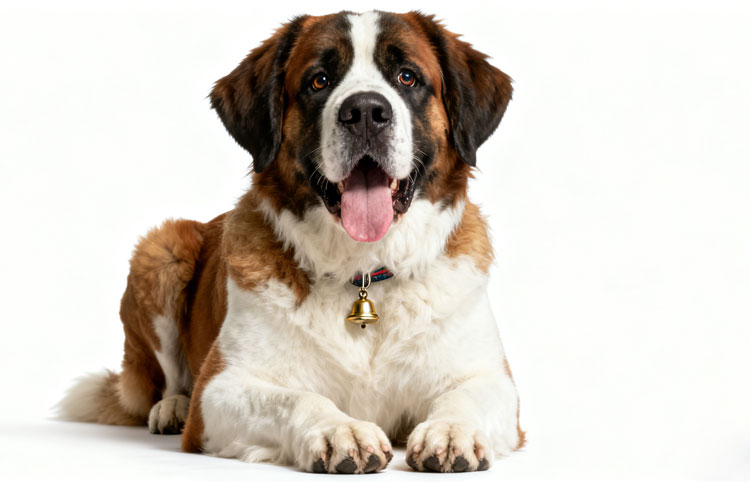
Saint Bernard, also known as the Saint Bernard Dog or Alpine Mastiff, originated in Denmark but achieved its most illustrious history and reputation in Switzerland. It is widely recognized as the most famous mountain rescue breed in history. The Saint Bernard’s face features a dark mask, giving it a dignified and solemn expression without appearing aggressive. Adult males typically stand between 70 and 90 cm at the shoulder, while females measure 65 to 80 cm. Weighing up to 220 pounds, they rank among the largest existing dog breeds.
I. Advantages of the Saint Bernard
1. Exceptionally gentle temperament. Saint Bernards show virtually zero aggression toward children, the elderly, or strangers. They are born “family nannies,” displaying such patience you might suspect they’re reincarnated monks.
2. Superb Guardians. Though they don’t bark fiercely, a Saint Bernard standing at the door—weighing around 200 pounds—is enough to deter thieves. Their sheer presence is a deterrent.
3. Cold-weather champions. With thick fur and a layer of fat, they thrive in sub-zero temperatures. Hugging one for warmth in winter beats central heating.
4. Heartwarming loyalty. Once bonded to you, they’ll love only you for life—the classic “if you’re good to me, I’ll climb mountains for you” type.
II. Saint Bernard Drawbacks
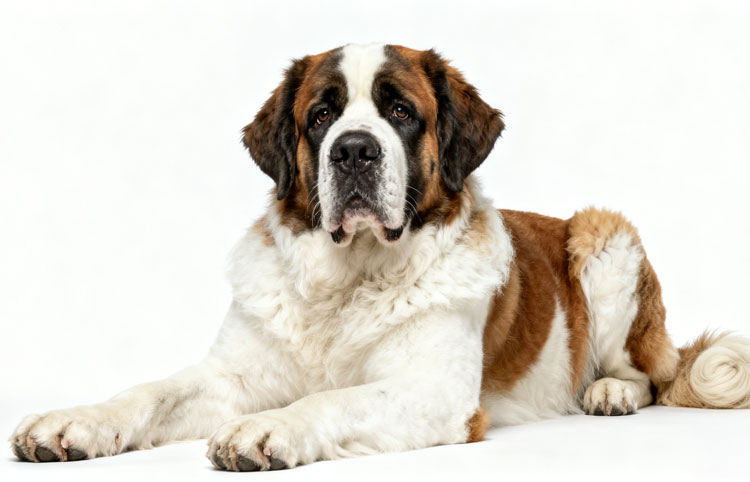
1. Insanely Drooly. Their drool can fill a basin. Sofas, floors, and your pants are constant targets—a dealbreaker for OCD sufferers.
2. Massive Size, Massive Destruction. A casual tail swipe sends everything off the coffee table. A happy jump might knock you over.
3. Saint Bernards have a short lifespan—a common trait among giant breeds. Their average life is 8-10 years, with many passing away by age 7. They face high risks of heart disease and bone cancer, making ownership essentially a pre-booked heartbreak.
4. Their shedding can fill vacuum cleaners. They shed year-round, with spring and fall resembling snowstorms. Surviving without a powerful vacuum is impossible.
5. Saint Bernards are prone to heatstroke in hot weather. Air conditioning and cooling pads are mandatory in summer—otherwise, they could overheat and die. Your electricity bill will take a hit.
6. Saint Bernards eat and poop a lot. Consuming 2-3 pounds of kibble daily is normal, and their waste output is substantial. Owners need nerves of steel.

III. Raising a Saint Bernard
1. Ample Space Required
Apartments are generally out of the question unless you have a duplex with a garden. Saint Bernards need a yard or at least 1-2 hours of daily outdoor activity, or they may become depressed and destroy furniture. Use a wide chest harness with a 2-meter leash for walks—their thick necks make standard collars prone to tracheal injury.
2. Scientific Feeding
Puppies (0-18 months) grow like balloons—feed large breed puppy food (approx. 26% protein, 1.2%-1.5% calcium). Adults require 2-3 meals daily, totaling 800-1200g of high-quality large kibble.
Common mistake: Giving extra treats when they look pitiful! This leads to hip and elbow dysplasia and significantly shortens lifespan. Switch to senior food + joint supplements after age 8.
3. Drooling & Shedding
A shake of their head sends drool flying onto walls… Keep towels handy, and avoid light-colored sofas at home. During spring/fall shedding seasons, vacuum daily; otherwise, brush twice weekly to remove loose hair. Long, floppy ears are prone to infections—clean ear canals weekly.
4. Heat Sensitivity
They feel overheated above 25°C (77°F). Avoid prolonged sun exposure in summer. Keep homes air-conditioned or provide cooling mats with ice packs. Walk early/late; use dog boots if pavement is hot.
5. Health Concerns
Common hereditary conditions: hip/elbow dysplasia, gastric torsion, heart disease, entropion. When purchasing, choose puppies whose parents have undergone OFA/PennHIP screening. Gastric torsion has a critical 2-hour window for emergency treatment. Use slow-feed bowls if they eat too quickly, and avoid vigorous exercise for 2 hours after meals.
6. Temperament Training
Puppies resemble bear cubs, reaching 20kg by 3 months. Without manners training, a 200-pound adult will crush you. The 3-6 month period is critical for socialization. Expose them to people and other dogs, teach “sit” and “stay” using positive reinforcement. Never yell at them—it will haunt them for life.
IV. Selecting a Saint Bernard
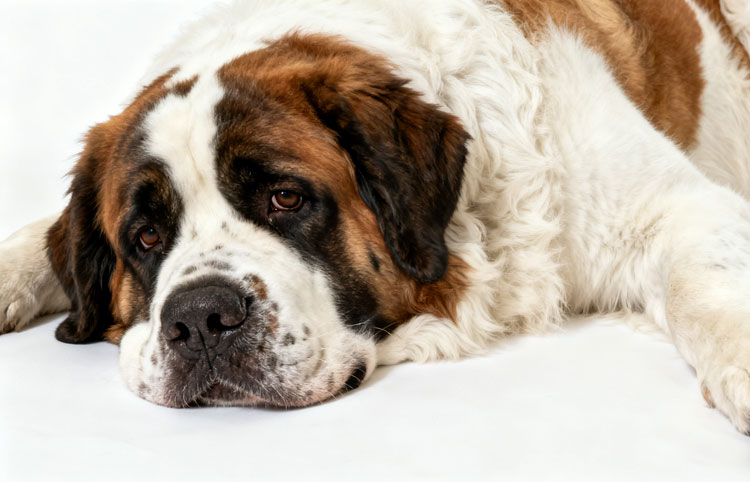
Adult Saint Bernards: Males: 70-90kg Females: 60-80kg Shoulder height: 70-90cm Giant breed! Heavy drooling, significant shedding, prone to overheating in summer. High susceptibility to heart and skeletal diseases. Lifespan: 8-10 years. If your home is small, you lack time for walks, or you dislike drool, skip this breed—don’t act impulsively.
1. Purchase Channels
Reliable breeders with CKU/FCI pedigree papers, reputable top-tier working dog kennels. Avoid pet stores, Sunday markets, or middlemen—they often peddle sick dogs repackaged as healthy. Don’t be tempted by low prices.
2. Select puppies aged 55-70 days
Too young means unweaned and weak immunity; too old (over 3 months) hides underlying issues. This age shows body structure, emerging temperament, and bite health.
3. Key inspection points
Eyes: Clear with no tear stains, no cherry eyes. Mouth: Scissors bite, with a slightly pendulous lower lip but no excessive drooling. Bone structure: Front legs should feel straight and sturdy; hind knees shouldn’t be overly loose. Hindquarters: Broad, rounded hips; hocks shouldn’t be excessively bent when standing. Coat: Thick with a good undercoat; skin should be pink and free of rashes. Temperament: Wags tail at strangers; doesn’t hide or bark excessively.
4. Pedigree
For attractive and healthy Saint Bernards, at least one parent must have: HD/ED hip and elbow scores of A or B, normal cardiac ultrasound. Working lines ideally possess drag/search-and-rescue certifications. Pure show lines often exhibit lightweight bone structure and weak hindquarters, with lifespans rarely exceeding 8 years.
5. Temperament Testing is Paramount
The ideal candidate resists lifting without struggle, offers its belly for petting, and boldly explores new environments. Saint Bernards should neither be timid nor overly excitable; docility paired with curiosity defines their nature.
V. Training Methods for Saint Bernards
1. Socialization (Golden Period: 8-16 Weeks)
This phase shapes the Saint Bernard’s courage and personality. Expose them to people, other dogs, diverse sounds, and environments—don’t shield them. While naturally gentle, inadequate socialization can turn them into “timid giants” prone to panicking and charging recklessly, with potentially dangerous consequences.
2. Leash Walking
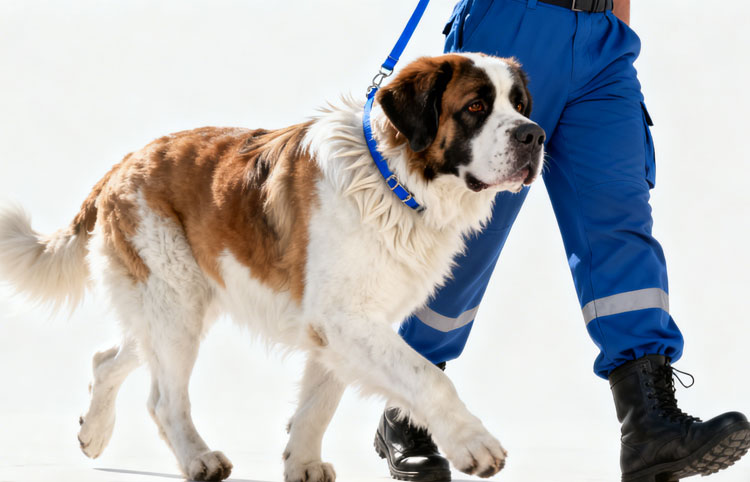
Adult males can easily reach 176-220 lbs, exerting immense pulling force. Begin teaching “heel” at 3 months using food incentives and positive reinforcement—never engage in tug-of-war. If it lunges forward, immediately stop and walk in the opposite direction. Repeat several times until it learns “pulling leads to no good.” A chest harness is far more effective than a collar—highly recommended.
3. Basic Obedience
They are extremely food-motivated, so bring high-value treats for training. Master the four basics: sit, down, stay, and come. Use short, consistent commands—e.g., always say “sit” instead of “sit down.” They learn slowly but remember well. Be patient: 5-10 minute sessions, 3-4 times daily.
4. Managing Excitement
It lunges at people, and its 90kg enthusiasm can knock you over. Teach “No” or “Stay” commands. Have them sit before greeting people, and only allow petting once seated. Practice with leash-on training when guests visit, then gradually transition to off-leash once proficient.
5. Exercise Requirements
Many assume Saint Bernards are lazy, but puppies under 1.5 years old are highly energetic. They need at least 1-2 hours of daily outdoor activity to prevent skeletal issues, depression, and obesity. They only truly become couch potatoes after age 2.
6. The Most Overlooked Point
Saint Bernards drool excessively. Teaching “Leave it” and “Switch” is crucial to prevent food or toy guarding in adulthood.
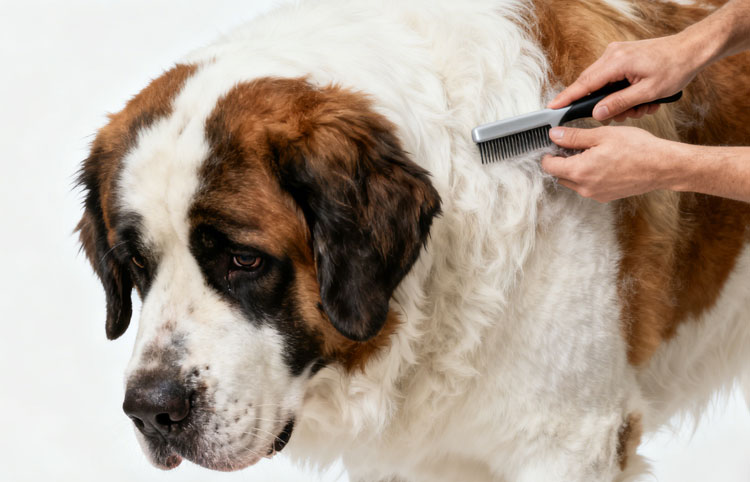
VI. Grooming Methods for Saint Bernards
1. Brushing
Brush daily for 5-10 minutes, doubling the time during shedding season. Use a wide-tooth steel comb (slicker brush) to first brush with the grain, then against the grain starting from the undercoat to remove all dead hair and undercoat. Finally, use a boar bristle brush to smooth the topcoat. Recommended Tools: Chris Christensen Large G Comb or Artero Long Pin Comb—expensive but exceptionally durable.
Key Areas: Neck, breeches, back of thighs, and base of tail. These spots are prone to matting, which quickly turns into felting.
2. Bathing
Avoid excessive bathing—once every 1-2 months is sufficient. Saint Bernards have thick sebum, and frequent washing can lead to skin issues. Use a mild dog shampoo and conditioner set. Keep water out of the ears! Cotton balls can be used to plug them.
Bathing process: Thoroughly wet the coat → Apply shampoo twice → Leave conditioner on for 5 minutes → Rinse thoroughly → Blot dry with an absorbent towel → Use a low-speed, cool-air dryer to gently blow-dry in the direction of the fur until 80% dry.
3. Trimming
Paws: Trim the hair on the soles into a rounded shape, exposing the pads to prevent slipping and dirt buildup. Rear area: Trim the hair around the anus short to prevent fecal buildup. Ear edges: Neatly trim stray hairs for a clean look. Tail: Minimal trimming is needed; just round it slightly along the bone structure. Use rounded-tip scissors for these cuts. Aim for a clean, tidy look rather than a show-style trim.
4. Grooming Details
Eyes: Wipe tear stains daily with a damp cotton pad. Saint Bernards are prone to heavy tear staining; consistent wiping helps fade marks. Ears: Apply a few drops of dog-specific ear cleaner weekly, massage gently, then let the dog shake them clean to prevent ear infections. Nails: Trim monthly; a nail file is preferable to avoid splitting. Teeth: Brush 2-3 times weekly. Due to excessive drooling, tartar builds up quickly.
VII. Foods Saint Bernards Must Avoid
1. Chocolate and Cocoa Products
Contain theobromine. Poisoning causes vomiting, rapid heartbeat, and seizures. Dark chocolate is more toxic. Given their size, even a large piece of dark chocolate can be fatal.
2. Grapes and raisins
Even a few can cause acute kidney failure. The specific toxin remains unknown, but symptoms appear rapidly. Discovery too late is often fatal.
3. Onions, leeks, garlic
Contain sulfides that destroy red blood cells, causing hemolytic anemia. Raw or cooked forms are dangerous. Many people mistakenly give dogs broth from soups containing these ingredients, with severe consequences.
4. Avocado
Contains persin, making the entire fruit toxic—especially the pit. Saint Bernards love chewing on things, so never let them get their teeth on one.
5. Xylitol
Found in sugar-free gum and some peanut butters. Ingestion causes blood sugar to plummet within minutes, leading to seizures and coma. The window for rescue is extremely short.
6. Alcohol, Coffee, Tea, Energy Drinks
Anything containing caffeine or alcohol is strictly prohibited. While a drunk Saint Bernard may seem amusing, its liver and kidneys suffer immediate damage.
7. Nuts
Macadamia nuts are highly toxic. Just a few can cause hind limb weakness, tremors, and fever.
8. Cooked bones, chicken bones, duck bones
These easily splinter into sharp shards. Saint Bernards chew bones ferociously, leading to countless cases of intestinal perforation and bloody stools.
9. High-fat foods
Saint Bernards are prone to pancreatitis. Consuming excessive oil can trigger acute attacks, causing them to writhe in agony.
10. Artificial sweeteners, fermented dough
Raw dough ferments in the stomach, causing gas buildup that may lead to gastric torsion. As mentioned earlier, xylitol is essentially lethal.
VIII. Common Health Issues in Saint Bernards
1. Hip and Elbow Dysplasia
Saint Bernards routinely weigh 70-90kg, placing immense stress on their joints. Many dogs show signs of lameness, difficulty standing, or hopping like rabbits by age 2-3. Severe cases require surgery. When purchasing a puppy, always check the parents’ HD/ED scores and prioritize A/B grades.
2. Gastric Dilatation-Volvulus (GDV)
This is an “acute killer” for deep-chested large breeds. Eating too quickly, overeating, or vigorous exercise after meals can trigger it. Once GDV occurs, it can be fatal within hours. Symptoms include: rapid ballooning of the abdomen, excessive drooling, retching, and extreme restlessness. Seek immediate veterinary care; delay can be fatal. Prevention: Use slow-feed bowls, feed in divided meals (2-3 times daily), and ensure 2 hours of quiet rest after eating.
3. Heart Disease
Dilated cardiomyopathy is not uncommon in Saint Bernards. Early stages are asymptomatic; later stages present with sudden coughing, abdominal fluid buildup, and weakness. Regular cardiac ultrasounds are crucial, especially after age 5.
4. Eye Issues
Most common are entropion (inward-turning eyelashes) and cherry eye, plus ectropion/entropion. Untreated in puppyhood leads to corneal ulcers and excessive tearing later. Cherry eye looks alarming but is easily corrected surgically.
5. Skin Conditions & Heat Stress
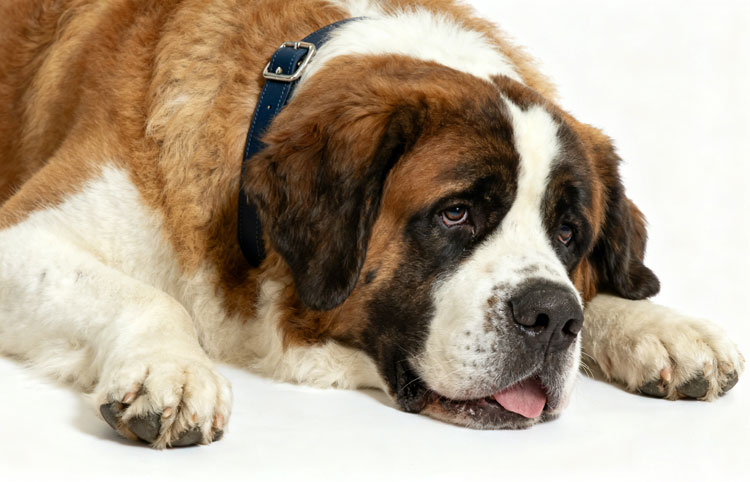
Thick coat + abundant subcutaneous fat = guaranteed summer misery. Prone to eczema, heat rash, and panting heavily while lying on the ground. Never shave them completely in summer—it makes it worse. Air conditioning must be kept running indoors, or avoid keeping them in southern regions altogether.
6. Osteosarcoma
The nightmare of giant breeds. Saint Bernards have a significantly higher incidence than average, often occurring in the long bones of the limbs. Sudden lameness, localized swelling, and tenderness to the touch are common symptoms. X-rays usually confirm the diagnosis, though detection often comes at an advanced stage.
7. Short Lifespan, Innately Brief
Average lifespan is only 8-10 years—roughly half that of many medium and small breeds. Heart issues, cancer, and joint problems frequently occur together. Owners should be mentally prepared.
IX. Saint Bernard Pricing
Adoption: Visit shelters or rescue organizations, typically $50–$300.
Purchasing purebred puppies: Average $1,000–$1,500. Obtain from reputable breeders with AKC-registered pedigrees at this price point.
Premium bloodlines: $2,000–$2,500 or higher; prices may reach $3,500 in the Northeast (e.g., New York).
10. Saint Bernard Lifespan
Average lifespan: 8-10 years. With good health care, 10 years is considered a normal senior age. Occasional 11-12-year-old cases exist but are very rare. They are a classic example of the “short lifespan typical of giant breeds.”

-
Sale!

Washable Pet Cooling Pad for Cats and Dogs
Original price was: $10.99.$9.99Current price is: $9.99. This product has multiple variants. The options may be chosen on the product page -
Sale!

Washable Cat Window Hammock Cooling Bed
Original price was: $23.99.$22.99Current price is: $22.99. -
Sale!

Tropical Amphibian Rainforest Tank, Lizard Cage
Original price was: $38.99.$36.99Current price is: $36.99. -
Sale!

Silent 4-in-1 Waterproof Charging Dog Hair Trimmer
Original price was: $49.88.$47.99Current price is: $47.99.
