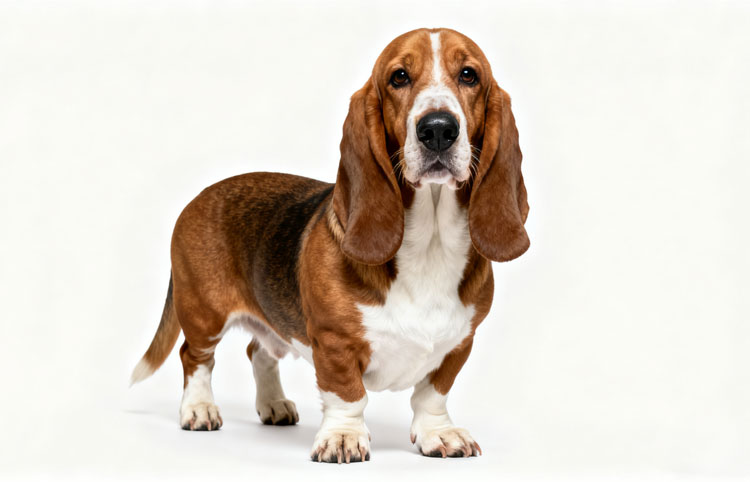
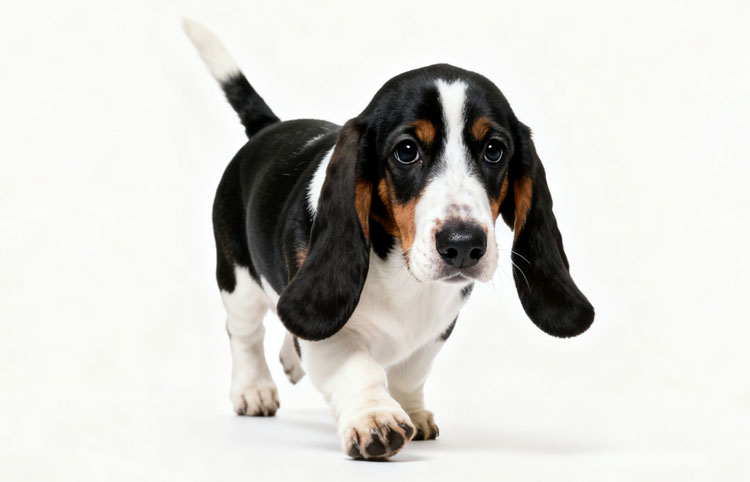
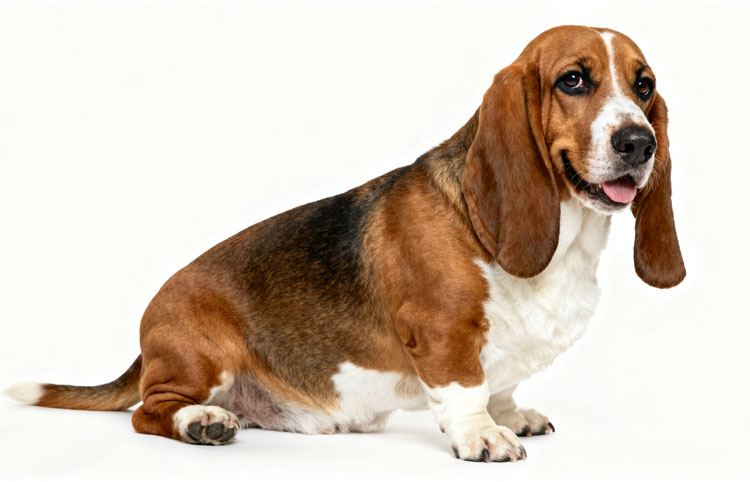
The Basset Hound, originating from France, is a medium-sized, short-legged hunting dog with an inherently adorable appearance. The “Basset” in its name derives from the French word for “short,” perfectly describing its low-slung, long-bodied form. Standing 33–38 cm at the shoulder and weighing 18–29 kg, Its round head features long, velvety ears that hang loosely. The Basset Hound’s nose ranks second only to the Bloodhound’s in scent detection, boasting an extraordinary sense of smell. It can track scents while keeping its head low, a trait that made it ideal for long-distance hare hunting in earlier times.
I. Physical Characteristics of the Basset Hound
Ears: Long ears that hang easily below the chin, often stepping on them while walking or flipping them over to cover the head.
Skin: Extremely loose skin with numerous wrinkles, especially on the forehead and around the eyes.
Eyes: Drooping eyelids reveal large patches of red conjunctiva. Diamond-shaped eyes paired with a sorrowful gaze can be as disarming as an Akita showing its belly.
Build: Basset Hounds have a large bone structure. Males stand 30-38 cm at the shoulder, but their legs are absurdly short, with a body length three times that of their leg length.
Coat Color: Classic tricolor: black, white, and tan; bicolor: lemon and white, red and white. Solid colors are rare. The coat is short and coarse, feeling like sandpaper but not scratchy.
II. Advantages of the Basset Hound
1. Gentle Temperament: The Basset Hound is a natural “therapy dog,” exceptionally friendly toward children, seniors, and strangers alike. Virtually non-aggressive, having one at home feels like adding a walking, walking pillow.
2. Hilariously Goofy: With their long ears, stubby legs, serious expression, and soulful eyes, Bassets’ daily antics will have you laughing until your sides ache. Their photos always have built-in comedic effect.
3. Exceptional Sense of Smell: Basset Hounds boast the world’s second-strongest scent detection ability, surpassed only by Bloodhounds. Once they pick up a scent, they can track it for miles. When out for a walk, they’ll always be the one leading you.
4. Adaptable: Despite being a hound, it doesn’t require much exercise—about an hour’s walk daily satisfies it. Perfect for owners who don’t want a high-energy dog, and suitable for apartment living.
5. Distinctive Bark: The Basset Hound’s deep, “woof-woof” sounds like an old-fashioned horn, and it actually has a certain charm when heard from afar.
III. Basset Hound Drawbacks
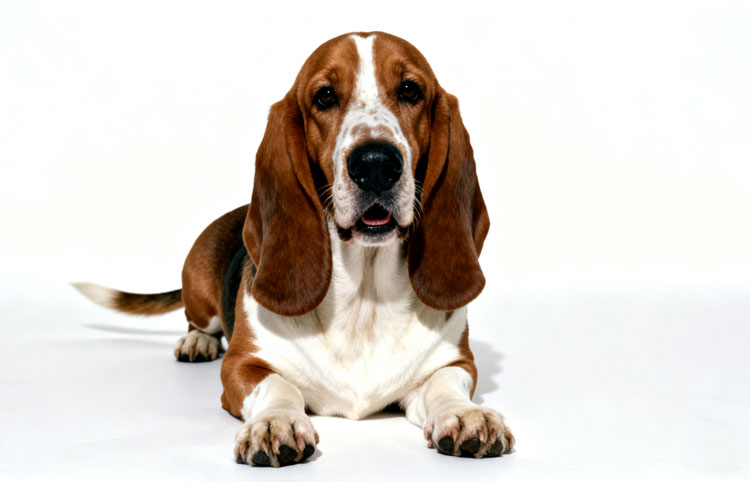
1. Stubborn: Ranked among the top 3 most stubborn hunting breeds. Once it picks up a scent, it freezes in place—impossible to pull away, making training challenging.
2. Excessive drooling: Long lips and loose skin mean they drool when excited, hungry, hot, or simply thinking about it. Sofas, pants, and your face won’t be spared—keep towels handy.
3. Shedding: Despite short hair, they shed heavily. The folds around their ears and neck easily become damp and smelly. Without regular bathing and cleaning, your home might develop a “unique aroma.” 4. Prone to obesity: Basset Hounds have slow metabolisms and a voracious appetite. If not carefully monitored, they can transform from sausage-shaped to rice cake-shaped in just three months. This puts significant strain on their joints, increasing the risk of hip dysplasia later in life.
5. Short lifespan: Average lifespan is 10-12 years. Common health issues include glaucoma, ear infections, intervertebral disc disease, and thrombocytopenia. Veterinary costs may exceed the initial purchase price.
IV. Caring for Basset Hounds
1. Exercise
Despite their short legs, Basset Hounds are scent hounds with an innate love for tracking scents. Walk them at least 40–60 minutes daily, ideally split into two sessions. Let them sniff freely off-leash; otherwise, pent-up energy at home may lead to destructive chewing or excessive barking. Weight gain is common, and obesity can cause spinal and joint issues—regular walks are crucial for their health.
2. Diet
This dog would sell its soul for food and gains weight super easily! Feed adults twice daily—a handful of kibble is about the right amount. Never let them eat unlimited portions. Opt for low-calorie/joint-support formulas containing glucosamine and chondroitin, crucial for their long spine and joints. Limit treats to under 10% of daily calories, or you’ll soon have a “sausage dog.”
3. Grooming
The Basset Hound’s floppy ears trap air, making them prone to inflammation, ear mites, and wax buildup. Clean them weekly with specialized ear solution, using cotton balls until no dark brown residue remains. Tuck back skin folds to dry thoroughly—moisture breeds rashes and odor. Bathe weekly in summer, thoroughly drying ears with a hairdryer afterward.
4. Training
Basset Hounds are notoriously stubborn. Training relies entirely on “food bribery + infinite patience.” Don’t expect them to be as obedient as a Border Collie, but with consistent effort over 3–6 months, basic commands and potty training can be mastered. They are very clingy and fear loneliness. Avoid leaving them caged or alone for extended periods, or they may howl until neighbors call the police.
V. Basset Hound Training Methods
1. Begin Socialization at 8–12 Weeks
Expose your puppy to diverse environments, people, sounds, and surfaces to help them understand the world is vast. Otherwise, they may become fearful or bark excessively as adults. Missing this window means ten times the effort later.
2. Food Rewards
They have zero resistance to treats. Use high-value snacks with a clicker to mark and reward correct behavior instantly. If no reward comes within 3 seconds, they’ll forget what you’re doing.
If no reward comes within 3 seconds, they’ll forget what you’re doing.
3. Leash Walking
Basset Hounds turn into “tractors” when they pick up a scent, lying flat on the ground and refusing to budge. During training, use a front-clip chest harness with a 15-meter leash. Let them sniff freely in an open area. When they lift their head to look at you, immediately mark and reward. Gradually shorten the time between “sniffing and moving.” Never pull them—the more you pull, the more stubborn they become.
4. Basic Commands
Sit: Slowly move a treat from their nose toward the top of their head and back. They’ll naturally sit. Mark and reward.
Down: From a sitting position, guide the treat toward the ground between its front paws. It will lie down.
Come: Squat down, pat your thigh, call its name in an excited tone, then take two steps backward. Reward it when it chases you. Never chase it while shouting “Come!” when it disobeys, or it will learn that “calling me = I get to run farther.”
5. Train 5-10 minutes daily
Their patience is extremely short—they’ll lie down after 10 minutes. Short, frequent sessions are 100 times more effective than one 30-minute session.
VI. Basset Hound Grooming Methods
1. Brushing
Use a soft pin brush or rubber massage brush, brushing from head to tail. Focus on thoroughly brushing out the folds under the neck, on the belly, and at the base of the limbs. Do this 2-3 times weekly. While shedding isn’t severe, regular brushing removes dead hair, reduces odor, and stimulates sebum production for shinier short coats.
2. Ear Cleaning
Their ears are long enough to drag on the floor, offering poor ventilation and creating an ideal environment for bacteria and ear mites.
Method: Apply pet-specific ear cleaning solution, massage the base of the ear for 30 seconds, let the dog shake its head, then gently wipe the visible part with cotton. Never use cotton swabs to probe the ear canal. Clean immediately if you detect a sour odor.
3. Skin Folds
Sweat and food residue accumulate most easily in facial, tail base, and groin folds.
Gently wipe with unscented baby wipes or diluted pet wipes. After wiping, use a dry paper towel to absorb moisture—keeping these areas dry is crucial!
4. Bathing
Use an oatmeal-based or hypoallergenic dog shampoo. Wet the entire body first, focusing on scrubbing oily areas like the base of the ears, armpits, and belly. Rinse thoroughly after washing. Bathe once a month. When drying, use a medium-heat, low-speed setting and flip the ears back to dry them.
5. Nail and Paw Care
Basset Hounds have short legs, making nails prone to overgrowth and curling inward. Trim every 2-3 weeks, then file rounded edges with a nail file. Hair between paw pads easily mats—carefully trim away with small scissors.
VII. Selecting a Basset Hound
1. Assess the Parents
Always meet the parents, especially the mother. If the parents are calm, unafraid of people, and non-aggressive, the puppies will likely inherit these traits. Bassets are naturally laid-back, but if the parents bark wildly at people or cower in corners, it’s best to pass.
2. Assess Bone Structure and Build
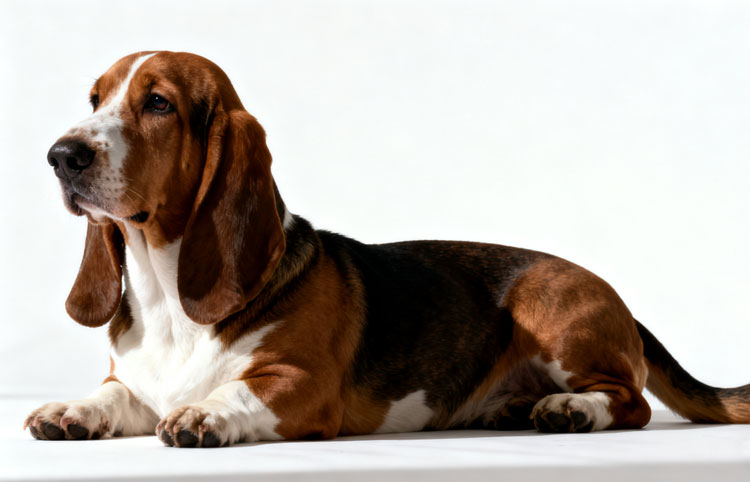
Look for a large frame, deep chest, slightly bent front legs, and loose skin. Dogs that are too thin, have overly straight legs, or excessively tight skin often indicate impure bloodlines or developmental issues.
3. Essential Triple-Check Features
Ears: Extremely long, low-set, thin, velvety soft, and floppy to the touch.
Eyes: Must exhibit the characteristic “sad eyes,” but avoid severe tearing, redness, or swelling.
Skin: Loose skin is standard, but check for eczema, excessive red spots, or foul odors.
4. Assess Temperament
A true Basset Hound greets people with tail wags and rolls over for pets. Shy or aggressive dogs indicate flawed temperament. Puppies aged 8-10 weeks can be gently lifted to expose their belly; tolerating this for several seconds before struggling indicates acceptable temperament. Avoid overly fussy or aggressive puppies.
5. Health Screening
Pedigree certificate, hip/elbow scores, CERF eye exam, first vaccination, deworming records.
VIII. Common Health Issues in Basset Hounds
1. Intervertebral Disc Disease: Their short, long bodies and low center of gravity place significant stress on the spine. Combined with abnormal cartilage development, they are prone to slipped discs. Mild cases cause hind leg weakness and wobbly gait; severe cases lead to paralysis. 30%-40% of Bassets will experience this issue in their lifetime. Therefore, never let them jump off couches or climb stairs, and strictly control their weight.
2. Ear Infections: While their signature floppy ears are charming, they offer poor ventilation and constantly drag on the ground. Moisture + dirt = a paradise for bacteria and fungi. Weekly ear cleaning is essential; otherwise, redness, pus, and constant head shaking or ear scratching become routine. Severe cases can produce an odor so foul it makes you question reality.
3. Hip/Elbow Dysplasia: This condition has a high hereditary rate, with many bloodlines carrying the gene. It often goes unnoticed in puppies but manifests between ages 3-5 with limping and difficulty standing. In advanced stages, the pain becomes excruciating, frequently requiring surgery or lifelong pain medication.
4. Glaucoma and Cherry Eye: Eye issues are also prominent. Glaucoma is highly hereditary in Basset Hounds. When it flares up, eye pressure skyrockets, causing the dog to bang its head against walls in agony. Without prompt surgery, blindness ensues. Cherry eye, while less severe, involves a red, swollen mass of tissue that detracts from appearance and typically requires minor surgery to correct.
5. Obesity Syndrome: These dogs have naturally slow metabolisms and an insatiable appetite, making them prone to ballooning into balls of fat. Obesity exacerbates all the above issues, particularly affecting joints and the spine, directly shortening their lifespan.
6. Skin Conditions & Allergies: With abundant folds and excessive sebum production, they’re prone to seborrheic dermatitis. Combined with common allergies to chicken and grains, body odor, excessive shedding, and scratching leading to red spots are frequent occurrences.
IX. Foods Basset Hounds Must Avoid
1. Chocolate and Caffeine
Containing theobromine and caffeine, poisoning causes rapid heartbeat, convulsions, and potentially cardiac arrest. A single piece of dark chocolate can send a 66-pound Basset to the ER—don’t take chances.
2. Grapes and Raisins
Even 4-5 raisins can trigger acute kidney failure, with symptoms typically appearing 12-24 hours after ingestion. Scientists still haven’t pinpointed the exact toxin responsible, so zero tolerance is essential.
3. Onions, Leeks, Garlic, Chives
Contain sulfides that destroy red blood cells, causing hemolytic anemia. Both cooked and raw versions are toxic—avoid hotpot broths and dumpling fillings. Overconsumption causes jaundice and cola-colored urine.
4. Xylitol
Triggers insulin spikes followed by rapid blood sugar crashes. Within half an hour, dogs may convulse, lose consciousness, and face severe liver failure risk. A single piece of gum can kill a Beagle.
5. High-Fat Foods
Fatty meats, fried chicken skin, and cream cakes can trigger pancreatitis. Basset Hounds are particularly prone to this condition. Once it strikes, the pain causes them to roll on the ground in agony, with a high mortality rate.
6. Avocados and Nuts
Avocados contain persin, while macadamia nuts can cause hind limb weakness, tremors, and paralysis within 24 hours, rendering the dog unable to walk.
7. Alcohol, Beer, and Liquor-Filled Chocolates
Drunk dogs aren’t comical—they genuinely suffer from alcohol poisoning and respiratory depression.
X. Deworming and Vaccinations for Basset Hounds
1. Deworming
Puppies: Deworm at 2, 4, 6, and 8 weeks of age, then monthly until 6 months.
Adults: Every 3 months for typical household dogs; monthly for dogs frequently outdoors or consuming raw meat.
Common medications: Bayer, Weijia, Happy Brown Sugar, Big Love Plus, Kulu, etc. Choose one that covers 4-5 types of worms.
2. Vaccinations
First year: Three combination shots
At 6 weeks, 10 weeks, and 14 weeks: Protects against distemper, parvovirus, infectious hepatitis, parainfluenza, adenovirus, leptospirosis, etc.
Rabies Vaccine
First dose at 3 months of age, followed by annual boosters. Many countries require rabies vaccination for travel.
XI. Basset Hound Pricing
2025 average price: $800–$1,500. Top pedigree: $2,000–$2,500. Recent listings on Puppies.com range from $350 to $1,400.
XII. Basset Hound Lifespan
Healthy Basset Hounds typically live 10-12 years. Well-cared-for dogs may reach 13-14 years, with occasional “senior citizens” living to 15. However, exceeding 12 years is considered a long life.

-
Sale!
Washable Pet Cooling Pad for Cats and Dogs
Original price was: $10.99.$9.99Current price is: $9.99. This product has multiple variants. The options may be chosen on the product page -
Sale!
Washable Cat Window Hammock Cooling Bed
Original price was: $23.99.$22.99Current price is: $22.99. -
Sale!
Tropical Amphibian Rainforest Tank, Lizard Cage
Original price was: $38.99.$36.99Current price is: $36.99. -
Sale!

Silent 4-in-1 Waterproof Charging Dog Hair Trimmer
Original price was: $49.88.$47.99Current price is: $47.99.
