The Border Collie is widely recognized as the “intellectual powerhouse of the canine world,” renowned for its intelligence, sharpness, and extraordinary learning ability—it picks up commands instantly and grasps concepts with remarkable ease. Originating from the Scottish border region, their primary role is herding sheep. They possess remarkable endurance, a warm personality, and are exceptionally affectionate. They require ample exercise and mental stimulation; otherwise, boredom may lead to destructive behavior. While slightly wary of strangers, they are fiercely loyal to their family.

I. Advantages of the Border Collie
1. Intelligence
The Border Collie consistently tops canine IQ rankings, capable of learning hundreds of commands or even sentences. Many teach themselves to open doors, turn on lights, or fetch slippers. Their learning speed might make you question, “Who’s really the boss here?”
2. Loyalty
The Border Collie treats its owner as the center of its universe, following you everywhere with unwavering focus. That “wherever you go, I go” devotion is truly heartwarming.
3. Exceptional Athletic Ability
Born to herd, Border Collies excel in bursts of speed, endurance, and coordination. They dominate medals in disc, agility, and obedience competitions. If you love the outdoors, they’re your ultimate workout buddy.
4. Stunning Looks
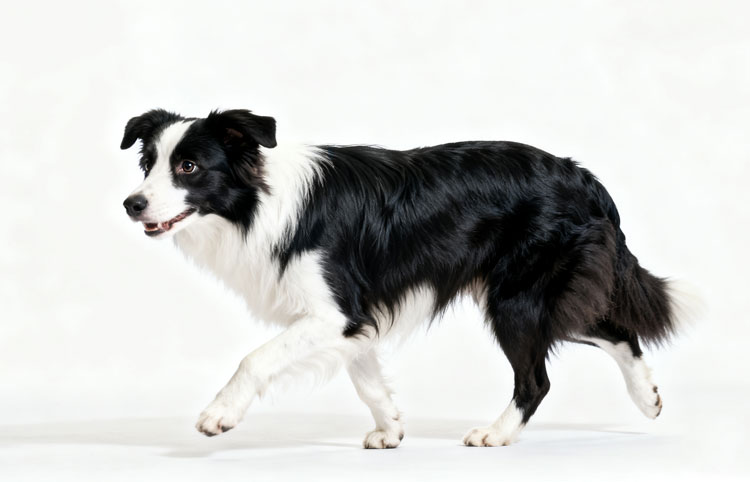
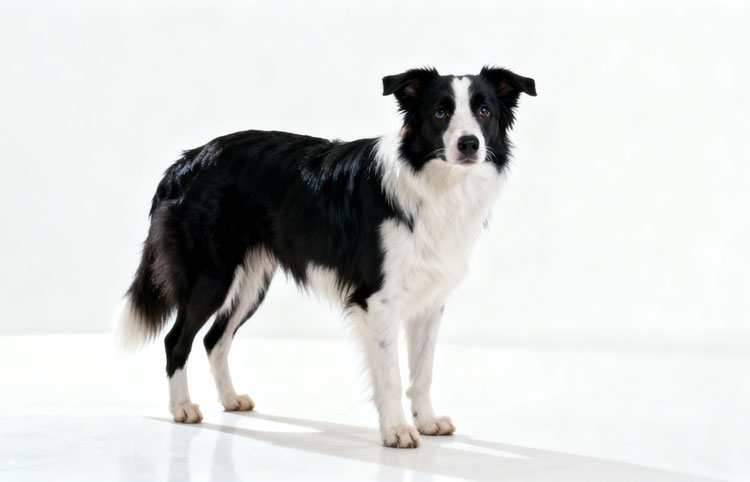
Their classic black-and-white coat, medium-length smooth and glossy fur, and bright, intelligent eyes make them picture-perfect—any snapshot could be wallpaper material.
5. Highly Adaptable
Border Collies adjust well to diverse environments and climates. With sufficient exercise, they thrive even in urban apartments.
II. Border Collie Drawbacks
1. High Energy Levels
Requires at least 2 hours of intense exercise daily. Simple walks aren’t enough—it needs both mental and physical stimulation. Without sufficient activity, it may destroy furniture, chew on couches, spin in circles, or bark incessantly, driving you mad.
2. Sensitivity
Border Collies are exceptionally intelligent, making them highly sensitive. They sense when their owner is down, stare intently at strangers visiting, and may tremble in fear at fireworks. When nervous, they can be as fragile as a delicate princess.
3. Strong Dominance Instinct
Many owners find themselves “herded” by their Border Collies, who love to gather people, cats, or even robot vacuums into groups. Without proper training, they might treat your kids or guests like sheep to herd.
4. Heavy Shedding
Especially long-haired Border Collies shed like crazy during seasonal changes. Skip a day of vacuuming, and your home becomes a sea of dog hair—owning one is like owning a perpetual shedding machine.
5. Not Suitable for First-Time Owners
Border Collies demand significant time for training and companionship. If you work 12-hour days or seek a “low-maintenance” dog, a Border Collie will leave you regretting your choice.
III. Border Collie Care Guide
1. Exercise
At least 1.5-2 hours of high-intensity exercise daily! Just walking isn’t enough—they need frisbee, herding balls, lure coursing, and puzzle toys. Only when both their minds and bodies are working up a sweat does it count. An under-exercised Border Collie will wreak havoc on your couch, remote, and door frames. Remember: A thoroughly exhausted Border Collie is a good Border Collie.
2. Mental Stimulation
Border Collies are born to work. Without a job, they’ll find one themselves. Dedicate 10-15 minutes daily to teaching new commands, playing with snuffle toys, scent games, nose work, or simply having them fetch your slippers or turn on lights. An idle mind is far more dangerous than an idle body.
3. Feeding
Feed high-quality puppy food tailored to developmental stages until 10 months old, then switch to adult formula. Don’t fall for “grain-free” or “fresh meat” hype—check the top three ingredients: ideally meat, not rice or corn. Feed until 70-80% full. Most Border Collies aren’t greedy eaters; those who gain weight usually get overfed treats by their owners.
4. Socialization
The critical socialization window is 8-16 weeks. Expose them extensively to people, other dogs, and diverse noise environments during this period—the richer the experience, the better. Simultaneously, enforce rules strictly: never tolerate biting, excessive barking, or food stealing. Border Collies learn quickly; one lapse in discipline becomes a lifelong habit.
5. Grooming
Weekly brushing suffices. During spring/fall shedding seasons, brush for 10 minutes daily. Avoid daily baths—once a month is sufficient using diluted dog shampoo to prevent dandruff and dermatitis.
IV. Selecting a Border Collie
1. Choose Puppies with Excellent Parentage
70% of a dog’s quality depends on its parents! Always inspect the parents: Verify official pedigree certificates, confirm they’ve passed hip and eye screenings, and ideally observe their temperament and working ability in person. Their stability or nervousness will directly influence the puppies.
2. Select 2-3-Month-Old Puppies
Eyes: Clear, alert gaze that holds your attention. Shy, evasive, or darting eyes often indicate a timid/nervous disposition.
Structure: Stand upright with strong hindquarters. Chest should be deep but not overly narrow. Movement should be light and coordinated.
Tail: When calm, tail hangs down or wags gently. Be cautious if tail is tucked or constantly held high.
Courage: Shake a keyring or clap hands. Avoid puppies that cower in corners. Ideal response is mild alertness followed by quick curiosity.
3. Temperament Test
When picked up and rubbed on the belly, ideal candidates struggle briefly before settling into acceptance.
Throw a ball or paper ball to observe chasing and retrieval behavior. Frenzied pursuit and strong retrieval drive indicate higher natural aptitude.
Interaction with strangers reveals whether the dog approaches confidently or hides behind its mother.
4. Structure Must Be Compact Yet Not Oversized
Ideal shoulder height: males 53-56cm, females 50-53cm; weight around 18-23kg. Medium-light bone structure—they should move like the wind. Overly stocky or heavy builds often indicate Golden Retriever/Australian Shepherd lineage, which compromises endurance.
5. Reputable sources save the most trouble
Spend more on a reputable breeder than risk buying cheap and ending up with lifelong genetic health issues.
V. Grooming Methods for Border Collies
1. Brushing
Brush thoroughly at least three times weekly. Always brush immediately after high-intensity exercise.
Recommended tools: Wide-tooth steel comb, pin brush/slicker brush, fine-tooth comb.
First, use the steel comb to detangle layers against the grain from back to front. Then, brush with the slicker brush along the grain to remove dead hair and dust. Finish with the fine-tooth comb to smooth the coat. High-risk areas include behind the ears, pants, outer thighs, and under the limbs. Always spread the legs wide to comb thoroughly; otherwise, moisture will cause matting.
2. Bathing
For typical household dogs, bathing every 3-6 weeks is sufficient. Bathe only when they smell, avoiding excessive washing that strips natural oils and leads to dry, coarse fur. Use a deep-cleaning dog shampoo, focusing on the hindquarters, belly, and between the toes. Thoroughly blow-dry afterward! Border Collies have extremely thick undercoats; incomplete drying can lead to eczema. When blow-drying, use your hand to fluff the undercoat against the grain to lift it. This creates a naturally standing, attractive coat. Never use a brush to smooth and straighten the fur while drying, as this will make it look flat.
3. Trimming
Trim paw pads into rounded shapes to expose pads, preventing slipping and dirt buildup. Shorten hair near dewclaws on hind legs to prevent matting. Gently trim ear edges if hair extends beyond the rim, avoiding excessive cutting. Only trim excessively long “mop hair,” maintaining natural flag-like shape.
VI. Border Collie Training Methods
1. Basic Obedience
Begin training immediately upon arrival (around 8 weeks old) with “name recall,” “sit,” “stay,” and “come here.” Border Collies learn quickly—they can master commands in a day—but forget just as fast, requiring daily reinforcement. Don’t be soft-hearted; those big eyes aren’t pleading for mercy, they’re calculating how to manipulate you.
2. Energy Management
Provide at least 1.5-2 hours daily of high-intensity, mentally stimulating exercise. Plain running won’t suffice—they need purposeful activities like disc, herding ball, treasure hunts, or scent walks. Most effective is teaching them to “turn off” their switch: after 20 minutes of intense play, they should calmly lie down. This exhausts them more than a 3-hour walk.
3. Core Training Programs
Eye Contact: The Border Collie’s natural weapon. Teach the “Look at me” command to break its fixation on bikes/cats/kids—like having a remote control.
Directional Commands: Teach “Left,” “Right,” and “Back.” This makes disc games and trick obedience look awesome, but more importantly, it makes them feel like you’re “herding” them—giving them immense satisfaction.
Stay Training: Teach it to stay in a designated spot—a lifesaver for preventing destructive “entertainment” at home.
Stop Whistle/Command: The most crucial skill for herding, also essential for halting it mid-charge toward traffic.
4. Important Notes
Never use physical punishment—Border Collies hold grudges and have fragile egos, leading them to ignore you completely. Avoid repeating commands; they hear you but may pretend not to because they find it boring. Never let them lose—once they think “I don’t have to do this,” you’ve lost. Ensure every training session ends in success, even if you have to simplify it to kindergarten level.

VII. Foods Border Collies Must Avoid
1. Chocolate & Caffeine: Contains theobromine and caffeine. Even a small amount can cause rapid heartbeat, seizures, or cardiac arrest. Dark chocolate is more toxic than milk chocolate. Coffee, tea, and cola also contain these substances.
2. Grapes & Raisins: Even a few can cause acute kidney failure. Border Collies are particularly sensitive to this. Symptoms may not appear immediately after ingestion, but within 24-48 hours, the dog may experience urinary retention and lethargy. If left untreated, it can be fatal.
3. Onions, Leeks, Garlic: Contain sulfides that destroy red blood cells, leading to hemolytic anemia. Raw, cooked, or powdered forms are all dangerous. Many people add onions when stewing meat; never feed leftover broth or scraps to your dog.
4. Avocado: Contains persin, making the entire plant toxic. Dogs may vomit, experience diarrhea, and potentially develop heart issues.
5. Xylitol: Found in sugar-free gum, toothpaste, and some peanut butters. Even small amounts can cause hypoglycemia and liver failure. Due to their light weight, Border Collies may be poisoned by as little as 0.1g/kg.
6. Alcohol: Beer, cooking wine, spirits—even a single lick can cause intoxication, coma, and respiratory depression.
7. McKenna Sensitivity: Some Border Collies carry the MDR1 gene mutation, making them extremely sensitive to certain medications. Consuming food scraps containing these ingredients can be dangerous. Genetic testing is recommended.
VIII. Border Collie Vaccinations and Deworming
1. Vaccinations
(1) First-Year Puppy Vaccination Schedule (typically starting at 6-8 weeks of age)
First shot: Usually a 6-in-1 vaccine covering distemper, parvovirus, infectious hepatitis, parainfluenza, adenovirus, and leptospirosis.
Second shot: 6-in-1 vaccine administered 21 days after the first shot.
Third shot: 6-in-1 vaccine plus rabies vaccine administered 21 days after the second shot.
Booster rabies shot: Can be given after 16 weeks of age.
(2) Annual Boosters for Adults
One annual dose of 6-in-1/8-in-1 vaccine, plus one annual rabies vaccine.
(3) Internal Deworming
Puppies: Start at 28 days old, every 2 weeks until 6 months old, then monthly thereafter.
Adult Dogs: Monthly year-round.
Recommended medications: Bayer, Frontline, Ultra, Flea & Tick.
(4) External Parasite Control
Monthly year-round. Recommended: Frontline, Advantage Multi, Ultra, or Nixy/Trust Chewable Tablets.

IX. Common Health Issues in Border Collies
1. Hip Dysplasia
This is the most prevalent genetic condition in Border Collies, particularly in lines with heavy working pedigrees. Symptoms include hind leg weakness, rabbit hopping gait, and reluctance to stand for extended periods. Early detection via X-rays at 8-12 months of age is possible. Early intervention through weight management and joint supplements can significantly mitigate symptoms; surgery is only required in severe cases.
2. Eye Disorders
This is the Border Collie’s most notorious “hereditary disease.” Mild cases involve retinal folds that do not affect vision, while severe cases can lead to retinal detachment or even blindness. The good news is that reputable breeders conduct DNA screening. Always request the parents’ CEA gene reports before purchasing a puppy.
3. Epilepsy
Border Collies exhibit a significantly higher incidence of epilepsy than average dog breeds. Seizures manifest as convulsions, foaming at the mouth, and loss of consciousness. Most first episodes occur between ages 1-4, classified as primary epilepsy with no identifiable cause. Medication provides excellent control, with minimal impact on lifespan.
4. Exercise-Induced Collapse
Also known as Border Collie Collapse Syndrome, this condition causes sudden hind limb weakness and staggering after intense exercise, resembling a “power outage.” Recovery typically occurs within minutes to half an hour. Triggers include high temperatures and excessive excitement. Genetic testing is now available; lifelong management of exercise intensity is sufficient.
5. Deafness
Deafness often occurs when the Merle gene is stacked. Always perform BAER hearing tests when purchasing a double Merle.
6. Drug Sensitivity
Many Border Collies carry this gene, exhibiting extreme sensitivity to certain deworming medications. Even small doses can cause poisoning and seizures. Commonly used dewormers like “Fipronil” and “Selamectin” are safe for them—remember to choose correctly.
X. Border Collie Pricing
Standard pet-quality Border Collies: $70–210 USD. Typically locally bred with potential mixed lineage.
Purebred with pedigree: $280–700 USD. Suitable for first-time owners, commonly found in pet stores or medium-sized kennels.
Premium show-quality or rare coat colors: $1,130–5,500 USD.
XI. Border Collie Lifespan
Border Collies typically live 12–15 years, ranking among the longer-lived medium-to-large breeds. With excellent care, some may reach 16–17 years.

-
Sale!

Washable Pet Cooling Pad for Cats and Dogs
Original price was: $10.99.$9.99Current price is: $9.99. This product has multiple variants. The options may be chosen on the product page -
Sale!

Washable Cat Window Hammock Cooling Bed
Original price was: $23.99.$22.99Current price is: $22.99. -
Sale!

Tropical Amphibian Rainforest Tank, Lizard Cage
Original price was: $38.99.$36.99Current price is: $36.99. -
Sale!

Silent 4-in-1 Waterproof Charging Dog Hair Trimmer
Original price was: $49.88.$47.99Current price is: $47.99.
