Police dog breeds aren’t simply about who runs fastest or bites hardest. They require exceptional obedience, a steady temperament, a strong prey drive and possessiveness, and the ability to maintain a clear head under high-pressure situations. Below, we’ve ranked the top 10 most mainstream police dog breeds from highest to lowest based on actual usage frequency and job suitability.
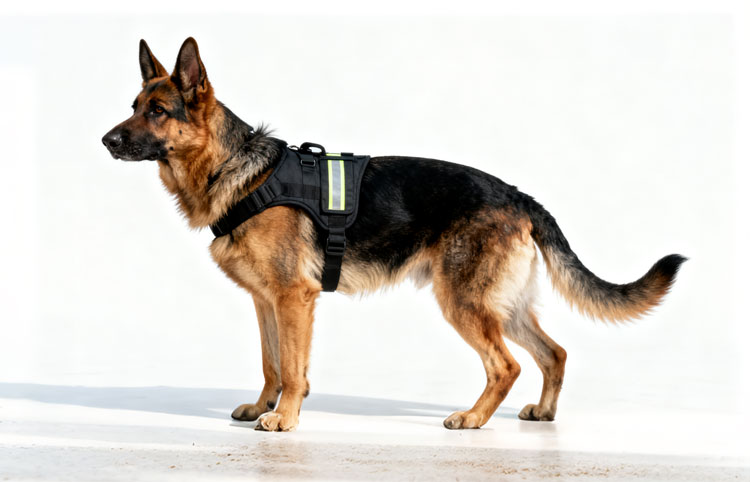
Police dog breeds 1. German Shepherd Dog
The undisputed “King of Police Dogs,” holding the top spot globally in police force adoption.
Build: Males stand 60-65cm at the shoulder, weighing 30-40kg; females are slightly smaller. Heavy bone structure, long limbs, and powerful hindquarters.
Temperament: Confident, courageous, exceptionally stable nerves, extremely high drive, top-tier obedience, absolute loyalty to handler, yet naturally wary of strangers.
Strengths: An all-around champion excelling in patrol, narcotics detection, explosives detection, search and rescue, criminal tracking, bite work, SWAT tactics… there’s almost nothing it can’t do. Highly trainable, mastering complex tasks within 3-6 months. Exceptional endurance, thriving in extreme temperatures and high-intensity environments.
Disadvantages: Higher genetic predisposition to hip and elbow dysplasia, particularly prevalent in American lines. Workaholic tendencies—leaving them idle may lead to furniture destruction or depression. Shedding is avalanche-like; spring/summer molting seasons can fill an entire vacuum cleaner.
Ideal Roles: Frontline patrol, SWAT assault, criminal investigation, dual-certified drug/explosives detection.
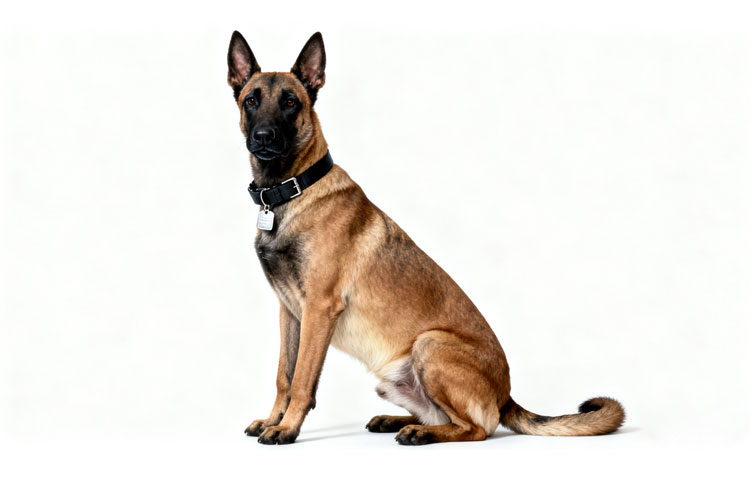
Police dog breeds 2. Belgian Malinois
This breed has surged in popularity in recent years, with many national SWAT units replacing German Shepherds with Malinois for one reason: they’re crazier, lighter, and faster.
Build: Males stand 61-66cm at the shoulder and weigh 25-30kg—about 10kg lighter than German Shepherds but with extremely dense musculature.
Temperament: Neurotically sensitive, driven to the extreme, with insane explosive power and top-tier obedience—but requires highly experienced handlers.
Advantages: Outperforms German Shepherds in speed, jumping ability, and agility. Helicopter rappelling and scaling 3-meter walls are mere warm-ups. Bite force rivals German Shepherds, but lighter weight grants superior aerial control. Better heat tolerance than German Shepherds, with short, low-maintenance coats.
Disadvantages: Prone to nervous breakdowns and “overloading,” rendering them useless if trained by inexperienced handlers. Overreacts to environmental stimuli; idleness leads to nervous disorders and self-mutilation. Lifespan 1-2 years shorter than German Shepherds.
Ideal Roles: SWAT tactical dogs (SEALs, GIGN, GSG9, main force of Leopard Commando), high-rise building searches, narcotics detection.
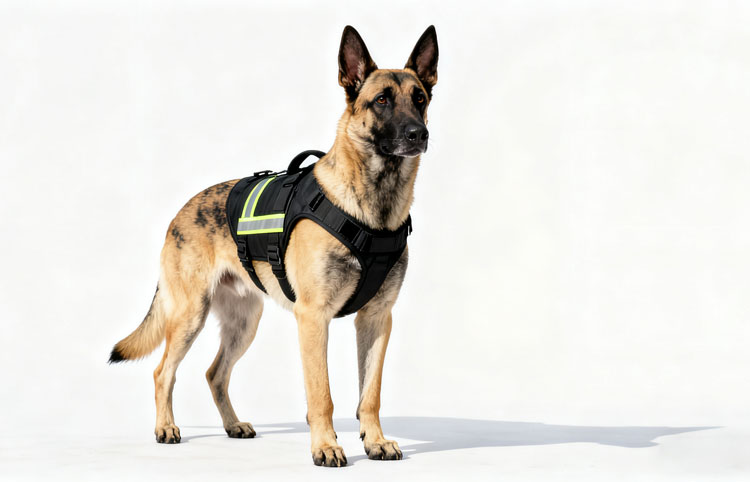
Police dog breeds 3. Dutch Shepherd
A close relative of the Malinois, but with a more stable temperament, increasingly favored by European police forces.
Build: Nearly identical to Malinois, weighing 25-30kg, available in short, long, or coarse coats.
Temperament: Slightly more “laid-back” than Malinois, yet still highly driven, with nervous stability between German Shepherd and Malinois.
Advantages: Durable, resilient, fewer genetic disorders than German Shepherds or Malinois. Exceptionally adaptable to environments, thriving in both heat and cold. Requires less training expertise than Malinois, making it more suitable for standard police officers.
Disadvantages: Low numbers, purebred working lines are nearly impossible to obtain. Low profile, small population.
Ideal Roles: Patrol, narcotics detection, bomb detection, tracking. Many European countries are actively replacing German Shepherds with Dutch Shepherds on a large scale.
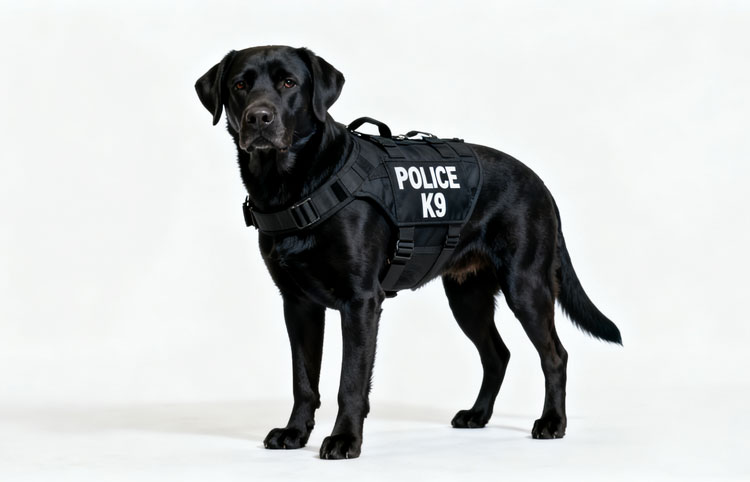
Police dog breeds 4. Labrador Retriever
The “king of narcotics and explosives detection,” especially the “soft-hearted killer” at airport customs.
Build: Males stand 56-61cm at the shoulder, weigh 30-36kg, with a rounded bone structure.
Temperament: Extremely friendly, highly motivated (especially for toys/food), gentle disposition, virtually non-aggressive toward humans.
Strengths: Top-tier scent sensitivity. Zero aggression toward strangers, capable of prolonged work in crowded areas. Temperament so stable it borders on “goofy,” safe for interaction with children, seniors, and pregnant women.
Weaknesses: Completely unsuitable for bite work or patrol protection. Excessively food-motivated, prone to obesity that impacts joints.
Ideal Roles: Narcotics detection, explosive detection, search and rescue, electronic storage detection (locates hard drives, USB drives), primary force for customs and airports.
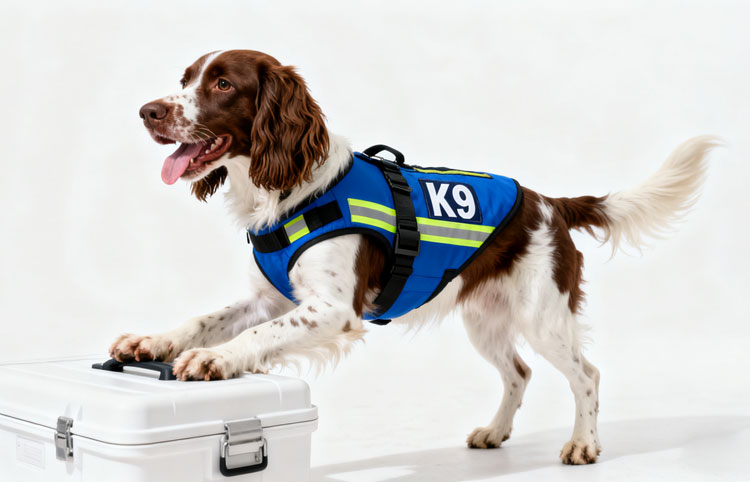
Police dog breeds 5. English Springer Spaniel
Rising star in European explosive detection, particularly in the UK and Northern Europe.
Build: Medium-sized, shoulder height approx. 48-51cm, weight 18-25kg.
Temperament: Incredibly driven, sweet-natured, exceptionally obedient, with an extraordinary sense of smell.
Advantages: Compact size allows access under vehicles, luggage racks, and confined spaces. Extremely fast search speed with wide coverage area. More “crazy” than Labradors, with sustained search drive.
Disadvantages: Long coat requires regular trimming. Virtually no protective drive, unsuitable for patrol duties.
Ideal Roles: Explosives detection, narcotics detection, body recovery, cash detection (replacing Labradors in many European airports)
Police dog breeds 6. Golden Retriever
Surprising, right? Golden Retrievers also serve as police dogs.
Build: Males stand 56-61cm at the shoulder, weighing 30-34kg.
Temperament: Sweeter than a Labrador, highly intelligent, excellent scent detection.
Strengths: Exceptionally stable, ideal for community policing, therapy work, and drug detection. Highest public acceptance during hospital/school deployments.
Weaknesses: Virtually no protective instinct, negative bite drive. Shedding worse than German Shepherds.
Best suited for: Community drug detection, therapy work, search and rescue.
Police Dog Breeds 7. Rottweiler
Once the backbone of police canine units, they are gradually being phased out of frontline duty, though still employed by some nations.
Build: Males stand 61-69 cm at the shoulder, weighing 45-60 kg—pure muscle tanks.
Temperament: Inborn territorial instincts, intense protective drive, unwavering loyalty to owners, extreme wariness toward strangers.
Strengths: Maximum deterrent effect, terrifying bite force. Exceptionally bold, virtually unaffected by gunfire or explosions.
Weaknesses: Significantly lower obedience than German Shepherds, stubborn. High training difficulty, prone to failure. Now banned from police forces in many countries due to “dangerous dog regulations.”
Ideal roles: Prison guard, VIP protection, former patrol and apprehension duties.
Police dog breeds 8. Doberman Pinscher
The star police dog of the 1960s and 1970s, now significantly less common.
Build: Males stand 68-72cm at the shoulder, weigh 34-45kg, with elegant muscular lines.
Temperament: Sensitive, loyal, highly vigilant, and exceptionally swift.
Strengths: Speed and agility once surpassed German Shepherds. Short coat is low-maintenance and highly intimidating.
Weaknesses: Extremely high incidence of heart disease and short lifespan. Poor cold tolerance requires winter clothing. Less stable nerves than German Shepherds.
Ideal roles: Formerly used for patrol and protection, now largely retired.
Police dog breeds 9. Giant Schnauzer
Still deployed in frontline roles across Europe, particularly Germany.
Build: Males stand 65-70cm at the shoulder, weighing 35-47kg.
Temperament: Strong protective instincts, intense territorial awareness, intelligent, stubborn.
Strengths: Non-shedding coat, powerful bite, courageous, excellent endurance.
Disadvantages: Requires regular hand-stripping to prevent matting; lower obedience than German Shepherds; challenging to train.
Ideal Roles: Patrol, protection, prison guard
police dog breeds 10. Cane Corso & Various Mastiff Breeds
Only a handful of SWAT units are experimenting with these breeds, currently in the “experimental phase.”

-
Sale!
Washable Pet Cooling Pad for Cats and Dogs
Original price was: $10.99.$9.99Current price is: $9.99. This product has multiple variants. The options may be chosen on the product page -
Sale!

Washable Cat Window Hammock Cooling Bed
Original price was: $23.99.$22.99Current price is: $22.99. -
Sale!
Tropical Amphibian Rainforest Tank, Lizard Cage
Original price was: $38.99.$36.99Current price is: $36.99. -
Sale!

Silent 4-in-1 Waterproof Charging Dog Hair Trimmer
Original price was: $49.88.$47.99Current price is: $47.99.
