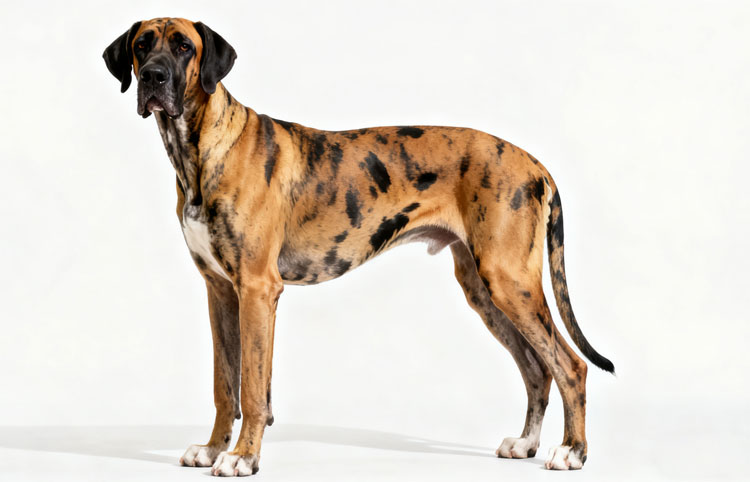
Great Dane, otherwise known as the German Mastiff, is fundamentally a breed that came from Germany. Along with being kept by the royals and the nobility of Europe, it was a symbol that represented glamour and prestige. These dogs exhibit excellent skills when fighting against a wild boar, a wolf, or any other type of prey. Usually, they are 70-90 cm tall at the shoulder and weigh 50-70 kg. Besides that, they have a long and not very much curved neck, a strong body, and muscles that are properly developed.
I. Advantages of the Great Dane
1. Great Danes have a kind and stable nature, strongly loyal, and loving to their owners. They hardly ever become aggressive towards people or other pets but only keep a vigilant attitude towards strangers.
2. Great Danes are more intelligent than an average dog; hence they are trainable and very fast in following the trainer’s instructions. After 1-2 weeks of basic training, they can learn the common commands such as “sit,” “heel,” and “potty training”.
3. Great Danes feature a huge, scary body. A grown male usually is 76-86 cm (26-34 inches) tall at the shoulder and weighs around 54-90 kg (12-20 lbs). Their scary appearance is what makes them a defensive weapon against intruders; at such times, they will give a low, intimidating bark as a warning.
4. Great Danes are extremely versatile and require only a few changes in their surroundings to live comfortably. They can live equally well in a city or in the countryside and can also stabilize their body temperature during hot or cold days.
5. Great Danes have short and smooth coats that are only 1-2 cm long and have no thick undercoat. Their daily maintenance is quite easy: their hair can be removed through brushing which is done 1-2 times weekly,lengthening loose hair and taking care of the dust and the hair are avoided. Bathing once or twice a month is quite enough.
II. Great Dane Drawbacks
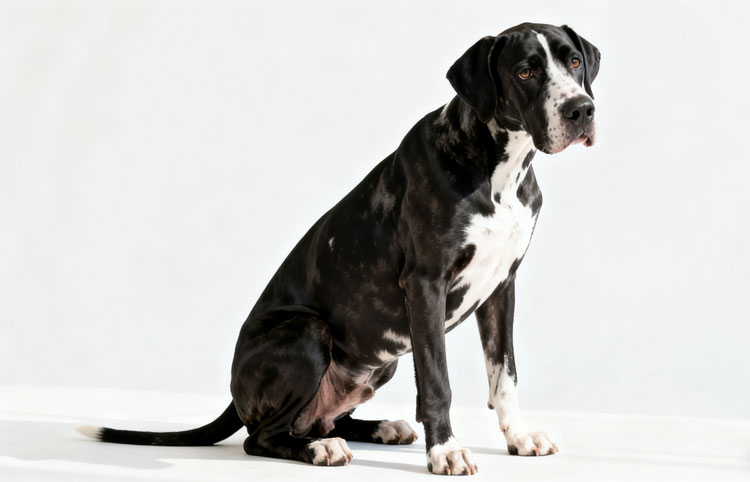
1. Great Danes are big dogs. When fully grown, from head to tail, they measure 1.2-1.5 meters. They need a lot of space to live; living in small apartments of less than 50 square meters will be uncomfortable and cramped for them.
2. Great Danes eat a lot. An adult Great Dane needs 500-800 grams of good-quality dog food per day, plus meat, vegetables, and other healthy foods. Expenses on food will be far higher than for small dogs if calculated monthly.
3. Great Danes have to be taken out for a long walk every day or do some other physical activities for 1-2 hours which should be of moderate intensity such as jogging or brisk walking. If they are not given the chance to exercise, they will become overweight and their joints will be excessively strained.
4. Great Danes have a relatively short life span, on average about six to eight years, which is the main drawback of large breeds. Their lifespan is only half that of small dogs, as they live for just 6-8 years on average. They mature very fast as well, only in 1.5-2 years.
5. Great Danes have weak bones. Due to their big size and fast growth, when they are still puppies, they are very prone to skeletal problems such as hip dysplasia and elbow arthritis. Even if they are adults, they should avoid any kind of heavy work such as jumping off a high place or making a sharp turn.
III. Great Dane Training
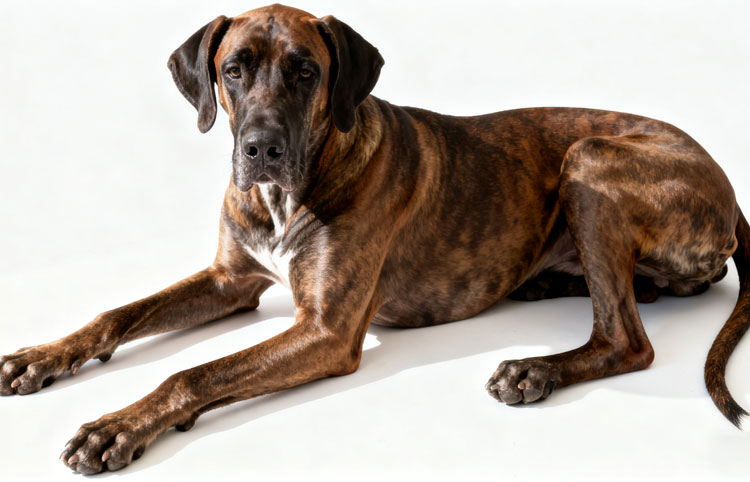
1. Basic obedience training should be started at the age of 3-6 months: The three main commands—”Sit,” “Heel,” and “Stay”—should be the first ones taught. Use treats like low-sodium jerky as rewards. Keep each session short—no more than 10 minutes—and do 2-3 sessions a day to develop command responsiveness through curiosity.
2. Introduce the leash as a behavior guide: When outdoors, always wear a P-chain or chest harness leash. If your dog is pulling toward a person and you want to stop it, quickly tighten the leash and say “No”. After 3 seconds of being still give a treat.
3. Use “No” commands consistently: In cases such as chewing furniture or jumping on visitors, if all family members uniformly employ the “No” command to stop the behavior, it will be very effective. Do not repeat commands. After the behavior has been stopped, direct the dog to the correct behavior and give him a reward.
4. Socialization training to prevent timidity or aggressiveness: At the age of 4-8 months, your dog should be introduced to different people, dogs, and places. Slowly increase the time of exposure and always keep the dog on a leash. Reward the dog when he is friendly.
5. Modify the training intensity to correspond to the size: Do not let Great Danes do things that require a lot of energy and are dangerous such as jumping or climbing stairs. Use the ground for your basic training and teach the dogs the commands there. After they have grown up, teach them to perform static commands such as “Down” and “Stay”.
6. Instead of punishing, use positive reinforcement: Great Danes are very sensitive. When they err, instead of scolding them or inflicting physical punishment, redirect their attention. Immediately give praise + tangible rewards after the dog has performed the command to help the dog understand that “doing the right thing = getting benefits”.
IV. Great Dane Grooming
1. Great Dane Coat Brushing
Use a large-breed slicker brush + short-bristle comb with detangling spray. Brushing sequence: Neck → Back → Loins → Hindquarters → Chest/Abdomen sides → Limbs. Hold the slicker brush at a 45° angle to the coat, making 3-5 strokes per section. For tangles, spray detangling spray first and gently separate with fingers—never pull forcefully. Increase grooming frequency to 2-3 times weekly during shedding seasons. After brushing, wipe the coat with a damp towel to remove loose hair.
2. Great Dane Bathing Procedure
Trim excess hair on paw pads. Insert cotton swabs into outer ear canals. Prepare absorbent towels, hypoallergenic shampoo for large breeds, and a blow dryer. Water temperature: 38-40°C (98.6-104°F). Wet the entire body from the neck down using lukewarm water, avoiding direct rinsing on the head. Dilute shampoo 1:5 with water, apply directly to coat, and massage with palms—avoid vigorous scrubbing. Rinse thoroughly until foam disappears. Press towel to absorb excess water, then blow-dry from back downward along fur direction, ensuring roots are completely dry.
3. Great Dane Nail Trimming
Use large dog nail clippers and a nail file, and have styptic powder ready. Once the Great Dane stands calmly, gently hold one paw with one hand, using your thumb above and index finger below to secure the joint, preventing struggles that could cause abrasions. Carefully examine the translucent part of the nail; the pink area indicates blood vessels. Trim only the front translucent part without blood vessels, avoiding the quick. Hold the clippers at a 45° angle to the nail, trimming only 1-2 mm at a time. Never cut too much in one go. After trimming, file the edges with a nail file to smooth any rough spots. If you accidentally cut into the bloodline and cause bleeding, immediately apply styptic powder with a cotton swab and press firmly on the wound for 1-2 minutes until the bleeding stops.
4. Great Dane Anal Gland Expression
Prepare disposable gloves, pet-specific wet wipes, clean paper towels, and anal gland expression solution. Position the Great Dane standing or lying on its side. Support its waist with one hand to stabilize the body. Wear gloves on the other hand to avoid direct contact with secretions. The anal glands are located on either side of the anus at the 4 o’clock and 8 o’clock positions. Pinch the skin 2-3 cm outside the anus with your thumb and index finger to locate the slightly raised area. Gently squeeze the glands toward the anus until yellowish-brown discharge is expelled. Wipe away any residue around the anus with a wet wipe or paper towel, ensuring no odor or residue remains.
5. Use a clean, damp cotton swab to wipe away tear stains and discharge around the Great Dane’s eyes. Avoid using irritating cleaning products.
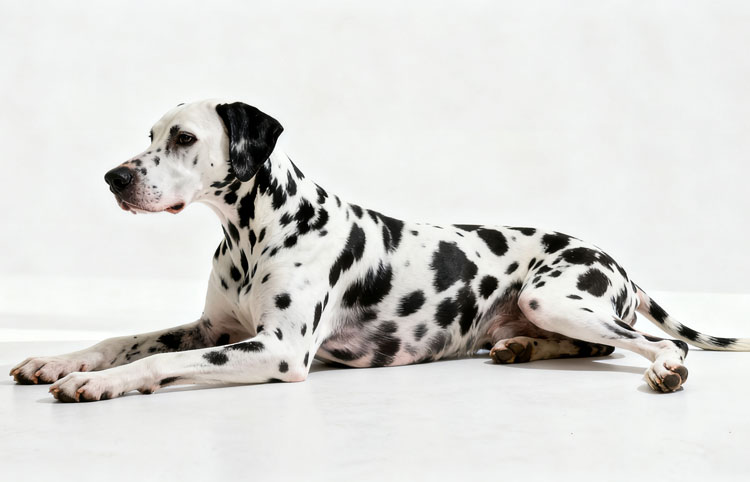
V. Great Dane Care
1. Feeding should be done 2-3 times a day; puppies need to be fed 4 times. Feeding portions should be eaten within 15 minutes to avoid overeating and obesity. Make a large breed-specific kibble the main diet and add 1-2 boiled egg yolks and small amounts of beef weekly. Also, keep away from feeding chocolate, onions, or bones.
2. Walk 1-2 times a day for 30-45 minutes each. Do not allow your dog to run vigorously or jump. Walk on flat surfaces; do not use stairs or jump over things if you want to lower hip dysplasia risk.
3. Provide an activity area of at least 15 square meters. Bumper your furniture edges for protection. Put thick bedding in the Great Dane sleeping areas, and ensure that the place is well-ventilated and dry so as not to cause moisture-related skin diseases.
4. Organize an annual full medical checkup. Carry out vaccination schedules for puppies. Deworm regularly. Groom your dog’s coat 2-3 times per week. Also, make sure the ear canals are clean and the nails are trimmed regularly.
5. Perform socialization training between 3-6 months to prevent aggression. Employ positive reinforcement when teaching basic commands. Great Danes are very clever; commands are usually understood after 5-8 repetitions. Never use physical punishment or give a harsh scolding.
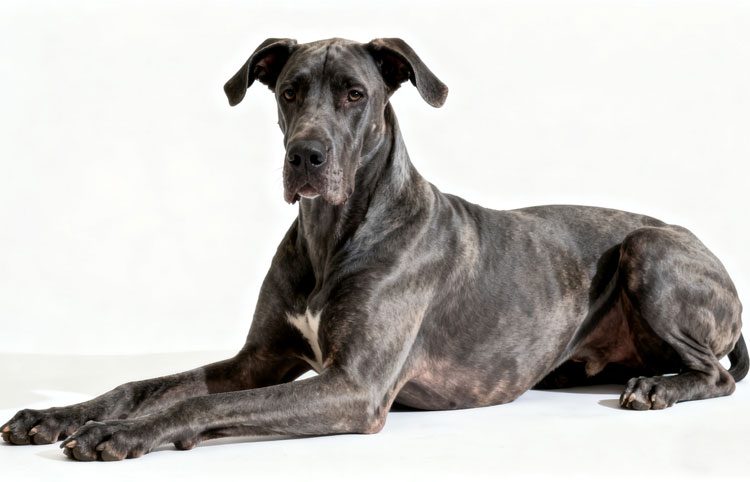
VI. Foods Great Danes Must Avoid
1. Chocolate: Theobromine is the main culprit. Great Danes are poor at metabolic processing, and even a tiny dosage may result in vomiting, rapid heartbeat, and seizures, kidney failure, or death in extreme cases.
2. Grapes/Raisins: No consumption level that is safe has been determined. They cause irreversible damage to the kidneys and may bring about kidney failure very quickly if ingaged.
3. Onions and Garlic: These contain sulfides that attack red blood cells, causing hemolytic anemia. Be ensured that you do not feed your dog with raw, cooked or processed ones.
4. Alcoholic Beverages: Alcohol is beyond the liver’s capacity to metabolize leading to an intoxication situation with symptoms like lack of coordination and rapid breathing – can be fatal.
5. Avocado: The flesh, seed, and skin have glyceric acid, which causes vomiting and diarrhea. Besides the seed can block the esophagus or the intestines.
6. Foods that contain Xylitol: It is a common ingredient in sugar-free gum and other snacks that can cause sudden blood sugar levels to fall and thus disrupt insulin levels, which may lead to hypoglycemic shock and death.
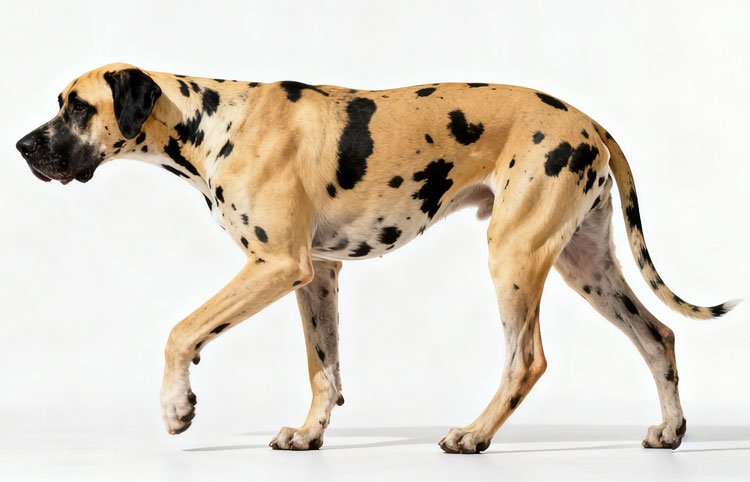
VII. Common Health Issues in Great Danes
1. Gastric Dilatation-Volvulus (GDV): It is the most dangerous condition which can cause death if not treated immediately, commonly occurs in Great Danes. Among its causes are feeding and water drinking in a single large meal, doing a vigorous exercise within 1 hour after eating, and eating fast. Main symptoms include rapid abdominal distension, frequent retching without vomiting, rapid breathing, and lethargy.
2. Hip Dysplasia: A genetically dominant disorder of the skeletal system. The large size and fast growth of Great Danes intensify the uneven joint stress. Symptoms live gradually make their way between 6-12 months of age: hind limb weakness when standing, limping gait, climbing stairs with hesitation, and hip pain/barking after exercise.
3. Dilated Cardiomyopathy: The main cardiac condition in adult Great Danes leading to cardiac enlargement. It is caused by decreased myocardial contractility. At the very beginning, symptoms are barely noticeable and eventually the dog becomes restless during breathing, coughs at night, accumulates fluid in the abdomen, and exercise tolerance is reduced significantly.
4. Elbow Dysplasia: It is mostly found in puppies resulting from abnormal cartilage development and poor bone alignment. Front limb symptoms are very obvious: lameness, reluctance to bear weight on the elbows, joint clicking during movement, and tenderness on palpation.
5. Progressive Retinal Atrophy: The genetic eye disorder which involves gradual retinal photoreceptor cells degeneration. First symptoms are night blindness, during the day vision becomes worse at the ages of 3-5 leading to total blindness.
6. Hypothyroidism: A metabolic disorder affecting the dog due to insufficient production of thyroid hormone. The following symptoms are present: weight gain without any explanation, dry, coarse, and easily shedding coat, dry and itchy skin, cold intolerance and excessive sleepiness, lethargy, and skin pigmentation.
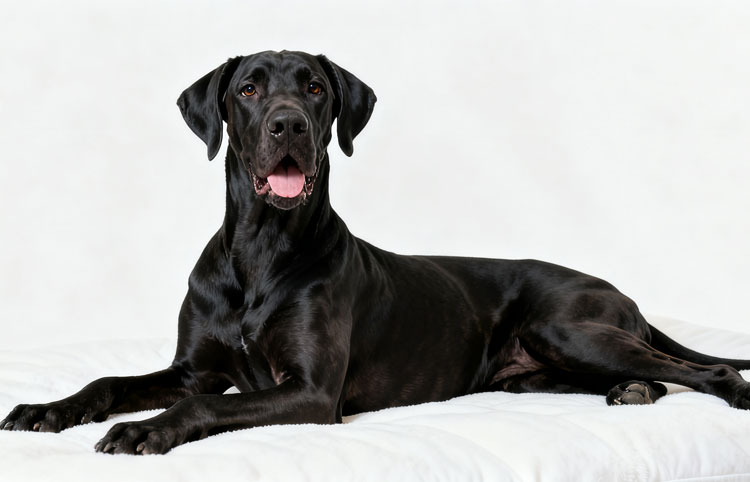
VIII. Great Dane Selection
1. Most of all focus on the mental state of the Great Dane: a dog should be full of life, energetic, and its eyes should be clear without any discharge. Check out the nose – it must be dry and a bit warm. The dog should not be panting if it is breathing from the mouth. Check the mouth: Gums should be nice and pink without any bad breath, and teeth should be in good alignment. Next, check the skin: the hair should be shiny and healthy without any dandruff, redness, or hair loss.
2. Impose on the breeder pedigree certificates by well-known organizations like CKU, that show the parental lineage is clean and traceable; do not get a dog that has no pedigree.
3. Pay attention to the limbs during the early stages of the life of a dog: the front legs should be straight without any bowing or knock-kneedness, the back legs on the other hand should be strong and muscular. The body should be that of a rectangle with a straight back that is neither too deep nor too arched. The head should be the right size, with a long snout and ears that are naturally hanging and is in line with the Great Dane characteristic “elegant giant” body type.
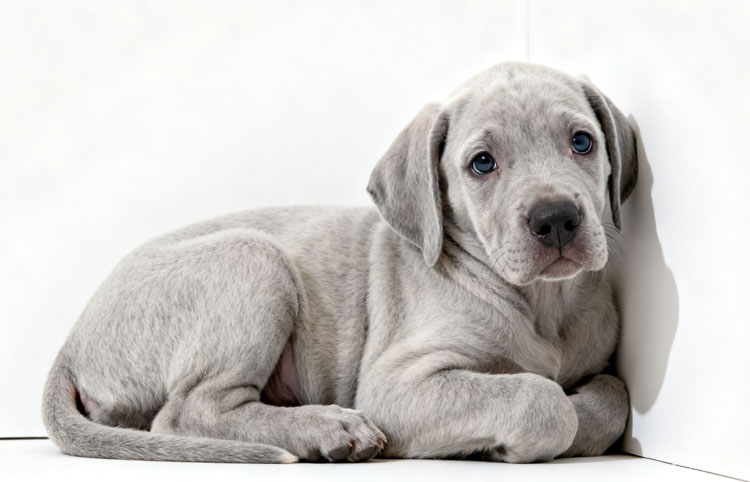
4. Evaluate temperament fit: Experiments involving play and toys can be used to interact with puppies that are not very shy, nor aggressive, and willing to come. Since a Great Dane is very heavy and big when it grows, puppies with such a kind and friendly nature towards people should be given the first place by the selection team.
5. Make it a condition that the breeder comes up with the vaccination records. After 45 days of birth, puppies are given their very first vaccination, and from there, they follow the vaccination schedule. Deworming should be done once every month, and the documentation of each treatment should be clear and precise.
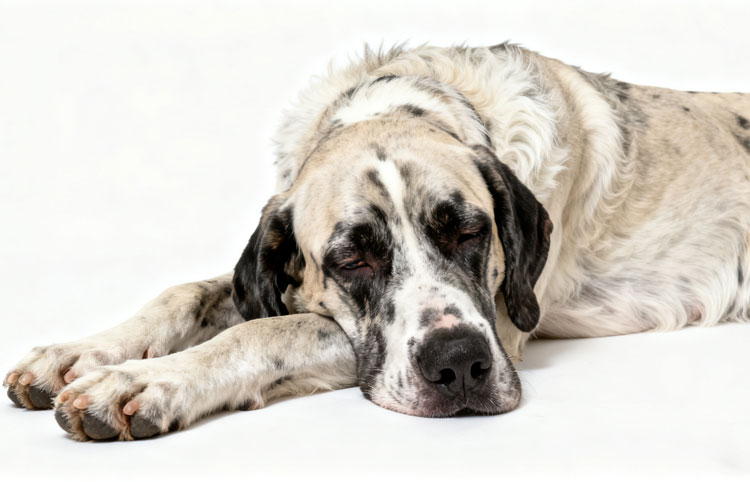
IX. Great Dane Lifespan
The average life span of a Great Dane is from 7 to 10 years. The majority of them pass away due to various health problems before their 8th year. In comparison, a Great Dane that is 10 years old is like 70-71 years in human life and his/her physical ability will be very close to that of a senior person.
X. Great Dane Pricing
Usually, good-quality pets (non-breeding) can be purchased for a price within the range of $281.80–$704.50. On the contrary, a purebred dog with pedigree certification will cost you from $704.50 to $1,409. In addition, pet lovers and the general public will have to pay between $1,409 and $42,270 if the dogs are bred for regular competitions. The price for adult show-quality dogs with championship bloodlines can be from $42,270 to $112,720.

-
Sale!
Washable Pet Cooling Pad for Cats and Dogs
Original price was: $10.99.$9.99Current price is: $9.99. This product has multiple variants. The options may be chosen on the product page -
Sale!

Washable Cat Window Hammock Cooling Bed
Original price was: $23.99.$22.99Current price is: $22.99. -
Sale!
Tropical Amphibian Rainforest Tank, Lizard Cage
Original price was: $38.99.$36.99Current price is: $36.99. -
Sale!

Silent 4-in-1 Waterproof Charging Dog Hair Trimmer
Original price was: $49.88.$47.99Current price is: $47.99.
